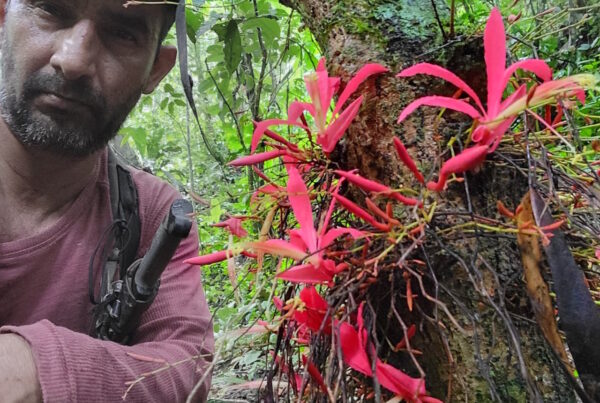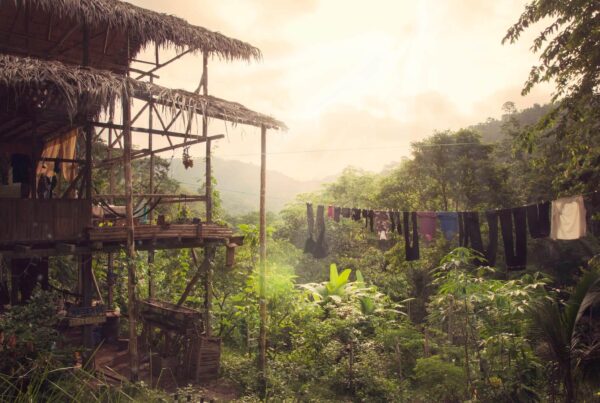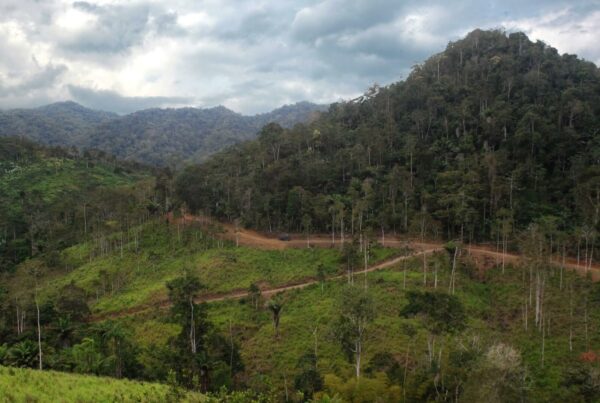
This discussion begins with an inconvenient truth for the environmental movement: forest conservation and reforestation, alone, are not realistic solutions to deforestation or climate change mitigation. The same applies to carbon credits and tree-planting philanthropy. They all fail to address the primary driver of global land use: food.
But this works both ways. Food is the primary source of the problem and it’s also a key part of the solution. A prime example is the Pacific Forest of Ecuador. It was almost entirely forested about a hundred years ago. Since then, most of it has been converted to agricultural land—predominantly cattle pasture for beef production. Now it’s coming full-circle. TMA is using food-positive reforestation to reverse that process. For the sake of simplicity, we call it Food-Forestation.
The goal of Food-Forestation is to restore forest and biodiversity without sacrificing local food security. TMA does this using two different methods:
- Regenerative agroforestry
- Assisted natural regeneration paired with high-efficiency food production
Our pioneering work in this field has been featured in Smithsonian Magazine and Mongabay.
 Food is the key to both rainforest conservation and restoration
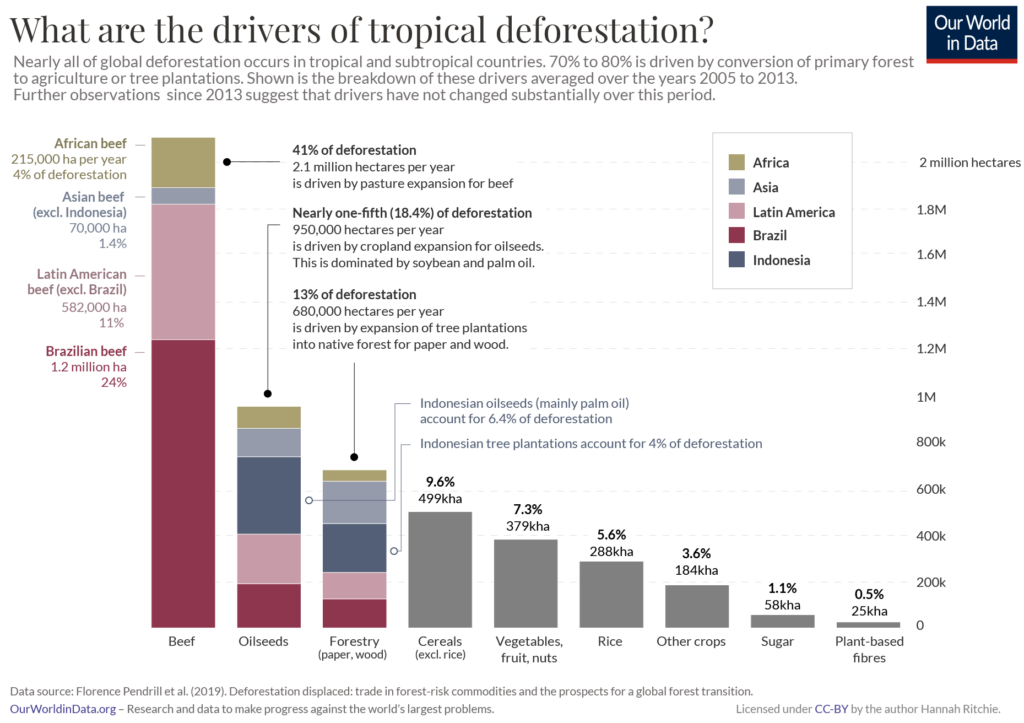
Agricultural expansion is the primary driver of deforestation and the biggest barrier to reforestation. Until that issue is addressed, all other would-be solutions only serve as temporary and localized band-aids.
Unless food production is replaced, it will simply be displaced to another area. That’s rule #1.
This is why carbon credits, conventional reforestation initiatives, and even forest preserves aren’t long-term solutions when implemented in isolation. They attempt to tackle the problem downstream of the root cause. Those strategies only become truly sustainable when they are aligned with the needs and realities of food production.
This doesn’t only apply to the Pacific Forest of Ecuador. It applies to every single major tropical forest on earth, from the Amazon and the Congo to Indonesia and Papua New Guinea.
Humanity will always choose food over conservation and carbon. That is the problem that we have to solve on a global scale. TMA’s work in Ecuador is an example of how to do it on a local and bioregional scale.
“It’s food, stupid!”
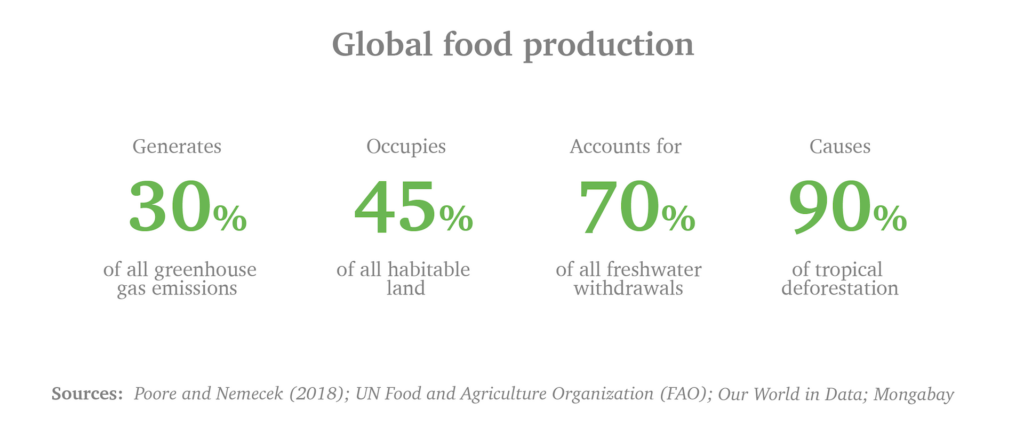
Human food production generates 30% of all greenhouse gas emissions, occupies nearly half of all habitable land on the planet, accounts for 70% of all freshwater withdrawals, and drives 90% of tropical deforestation. It is the single biggest driver of ecological collapse and biological extinction throughout the world.
Yes, the overuse of fossil fuels is a major threat to the biosphere, but food is the bigger problem.
Simultaneously solving reforestation and food security
Converting cattle pasture back into forest is fairly easy—we’ve been doing that for over 15 years and the success speaks for itself. For details, check out how we rapidly reforest large tracts of land with minimal cost.
But there’s a catch. If you don’t replace the food production that was displaced by the forest here, then someone else will probably cut down the forest elsewhere and do the same thing.
Sadly, this happens all the time. Everyone who earnestly works in tropical forest conservation and restoration is aware of this—either consciously or subconsciously. It’s fair to say this is the status quo.
This is a problem for two reasons: 1) it doesn’t solve the problem, it just displaces it, and 2) it often threatens or destabilizes food security.
Fortunately, there’s a way to fix this. That is the basis of our forest restoration work in the Pacific Forest of Ecuador.
How we do it
When we reforest land, we also make sure that we’re replacing food production on the same property or right next to it. That is the meaning of food-positive reforestation (aka “food-forestation“).
There are two ways that TMA does this.
- Regenerative Agroforestry: We replace marginal cattle pasture with regenerative agroforestry in partnership with local farmers. Shade-grown cacao trees are intercropped with banana, plantain, multiple species of fruit trees, and a wide diversity of tall native hardwood species, which form the upper canopy. This design effectively mimics the structure and function of a native forest while also producing food and a sustainable revenue stream for farming communities. TMA’s Regenerative Agroforestry program has been featured in Smithsonian Magazine and Mongabay.
- Native Reforestation with Food Replacement: We replace marginal cattle pasture with native forest paired with high-efficiency food production. The latter exceeds the food output of beef production but uses a much smaller area of land to do so. This allows over 90% of the land to be returned to native forest without sacrificing local food security.
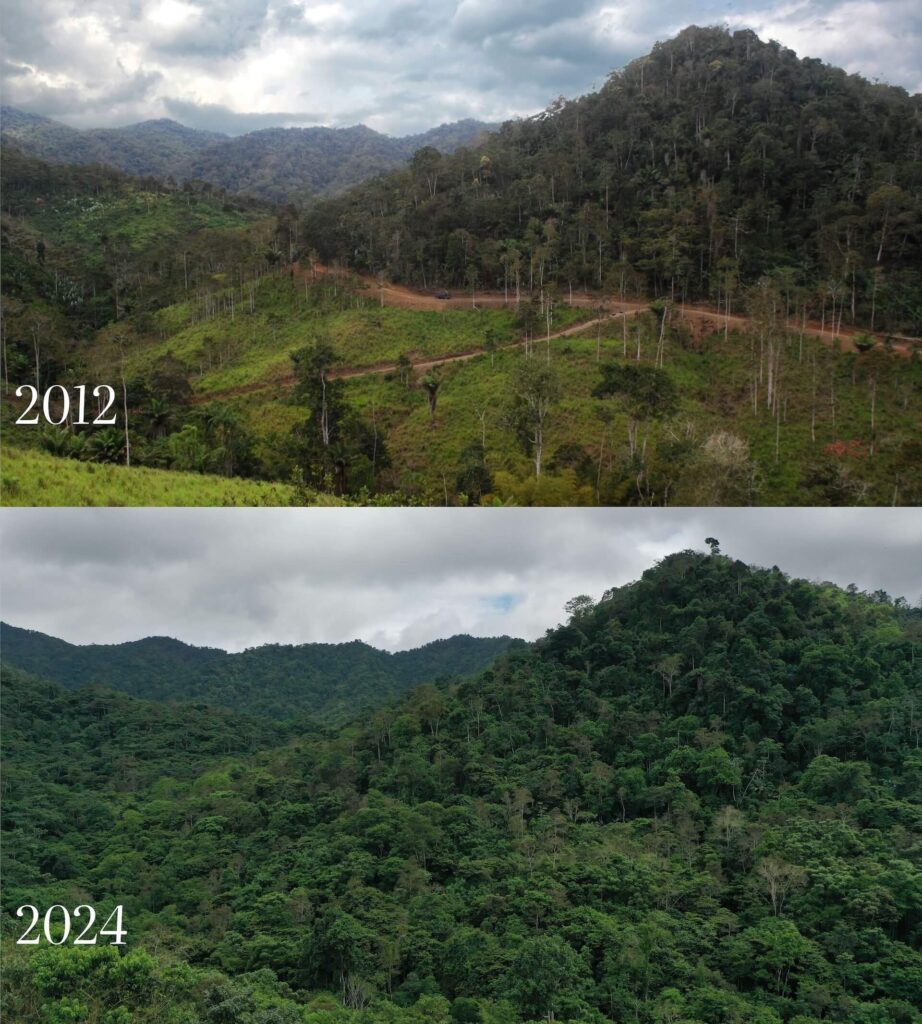
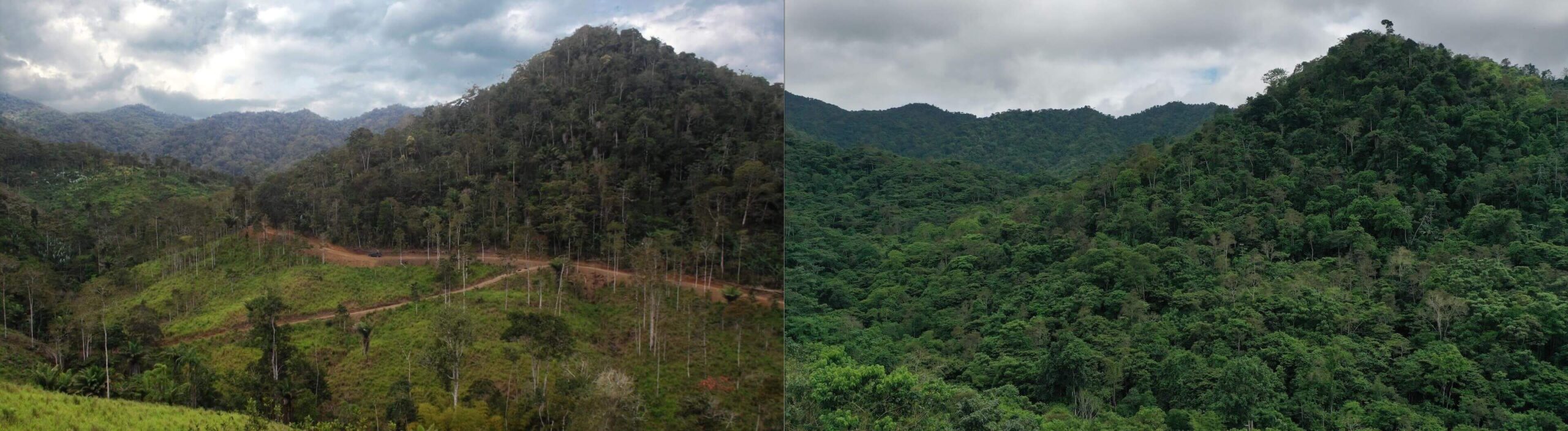
Before-and-after photos of cattle pasture converted to native forest by TMA (in partnership with ecological succession) in less than a decade. (Jama-Coaque Reserve, Ecuador)
Method #1: Regenerative Agroforestry
TMA works with over a hundred different farmers to convert deforested land into regenerative agroforestry farms that combine heirloom cacao trees with banana, plantain, and over 30 different species of food-producing and native canopy trees.
To trigger this transition, we use financial incentives combined with market access to premium chocolate companies like To’ak, which pay farmers the highest prices for cacao in the entire country. The result is the conversion of marginally productive cattle pasture or other forms of deforested land into highly productive and thriving agro-forests. Farmers increase their earnings, their communities have better access to local food, biodiversity is improved, and CO2 is removed from the atmosphere and stored in the biomass of the forest.
Our Regenerative Agroforestry program started in 2020 and continues expanding every year. TMA currently works with 110 farmers across six different rural communities in the Capuchin Corridor of coastal Ecuador.
Featured in:
- Smithsonian Magazine: The Quest to Save the World’s Most Coveted Chocolate
- Mongabay: Can agroforestry chocolate help save the world’s most endangered rainforest?

Method #2: Native Reforestation with Food Replacement
This particular approach can be applied on a local, bioregional, or even global scale. It belongs in the “land-sparing” section of the ecological restoration tool kit. The key is taking advantage of the extreme inefficiency of ruminant-based food production in ecosystems that are not meant to support them—especially tropical forests like the Amazon and the Pacific Forest of Ecuador.
Cattle can certainly play a constructive role in human food production in some parts of the world. In tropical forest ecosystems, however, cattle simply don’t produce enough food to merit the vast area of land they require. Moreover, they can easily be replaced with far more efficient forms of food production.
Generally speaking, we can produce the same amount of protein from most other animals or plant-based sources using less than 10% of the land required to produce beef in tropical ecosystems.
This holds true even when accounting for protein quality by using measures like the Digestible Indispensable Amino Acid Score (DIAAS). This is a more effective way of assessing protein value than simply adding up grams. DIAAS measures both the amount of protein a food contains and how effectively our bodies can digest it and use its essential amino acids. This is particularly relevant when comparing protein yields of plant-based foods with animal-based foods, since the latter generally score higher.
This means that for every 100 hectares of cattle pasture, we can convert at least 90 hectares to native forest and use less than 10 hectares for more efficient forms of food production. This is how TMA reforests over 90% of pastureland without sacrificing food security.
The forest restoration Part
The forest restoration part of the equation is relatively easy and extremely cost-effective. The key ingredient is the natural process known as ecological succession, which is nature’s built-in mechanism for recovery. When humans walk away, landscapes gradually return to a wild state.
Ecological succession is the most efficient way to restore land at scale. It’s also the primary tool we use to reforest large tracts of cattle pasture in Ecuador. In severely degraded areas, we often accelerate the process with high-leverage reforestation techniques like assisted natural regeneration, enrichment planting, and applied nucleation. But for the most part, all humans have to do to restore land is step back and let Mother Nature do the heavy lifting.
In our experience, it generally takes us less than 10 years to convert pastureland into a secondary-growth forest.
The results speak for themselves. The photo below shows before-and-after photos of one of our pasture-to-forest restoration projects. The time range of the photos is 12 years, but in reality most of the work was completed by year 6. From then on, forest recovery is largely on autopilot. In some cases, we continue once-annual weeding and thinning to accelerate the process. But at that stage, the process of ecological succession is already well underway and continues by force of ecological inertia.
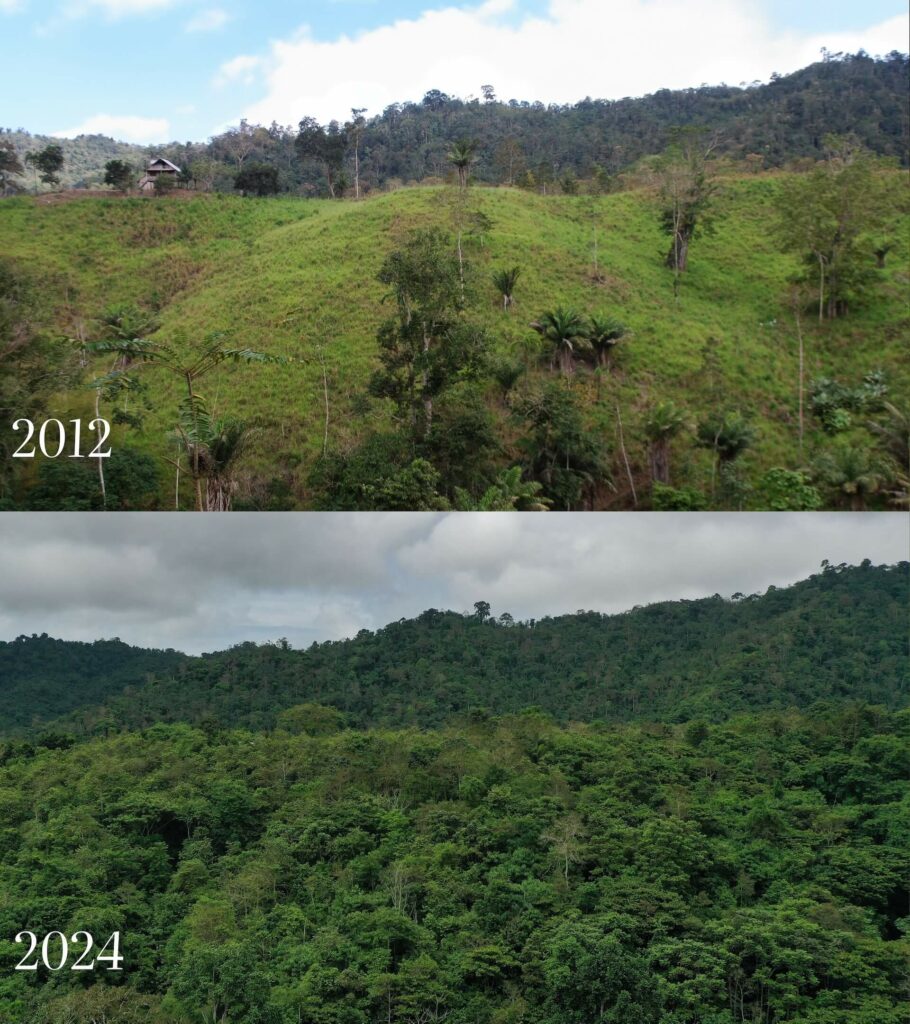
Another former cattle pasture restored to forest through assisted natural regeneration – rapidly and at low-cost.
The food replacement part
In the reforestation + food replacement method, the food system transition is initiated at the same time as forest restoration but only on about 10% of the land.
The mix of food production alternatives will vary according to the unique soil, climate, and socioeconomic conditions of the site and the objectives of the people who are executing the transition. TMA primarily uses high-density agroforestry as its primary production method, although we’re currently adding silvopastoral systems into the mix.
Even though only a small portion of the land is used for food production, its overall output and nutritional value is actually greater than what it used to be as an extensive low-intensity cattle pasture. This is better for the ecosystem and it’s also better for local food security.
The future of bioregional forest restoration
Food-positive reforestation is the future of ecological conservation and restoration. TMA is already doing this on a community scale of hundreds of hectares. The next step is to ramp this up to the bioregional scale of thousands of hectares throughout the Capuchin Corridor in partnership with 36 agricultural communities that live here. To learn more, check out: Community Forests Program (Bosques Comunitarios): A viable pathway to building the Capuchin Corridor.
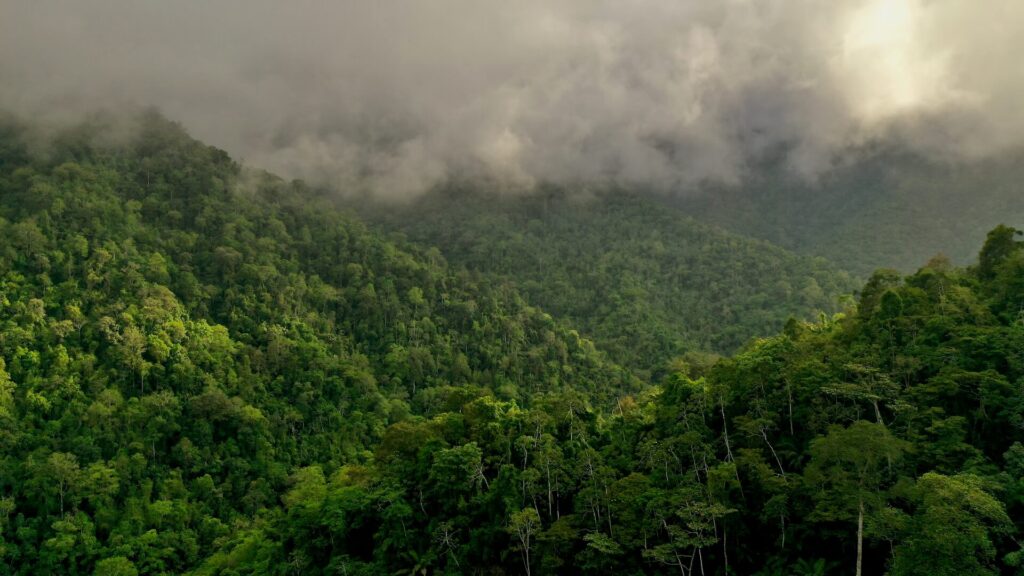
The Capuchin Corridor is the heart of the Pacific Forest of Ecuador. (Jama-Coaque Reserve)
This is how we rewild the world
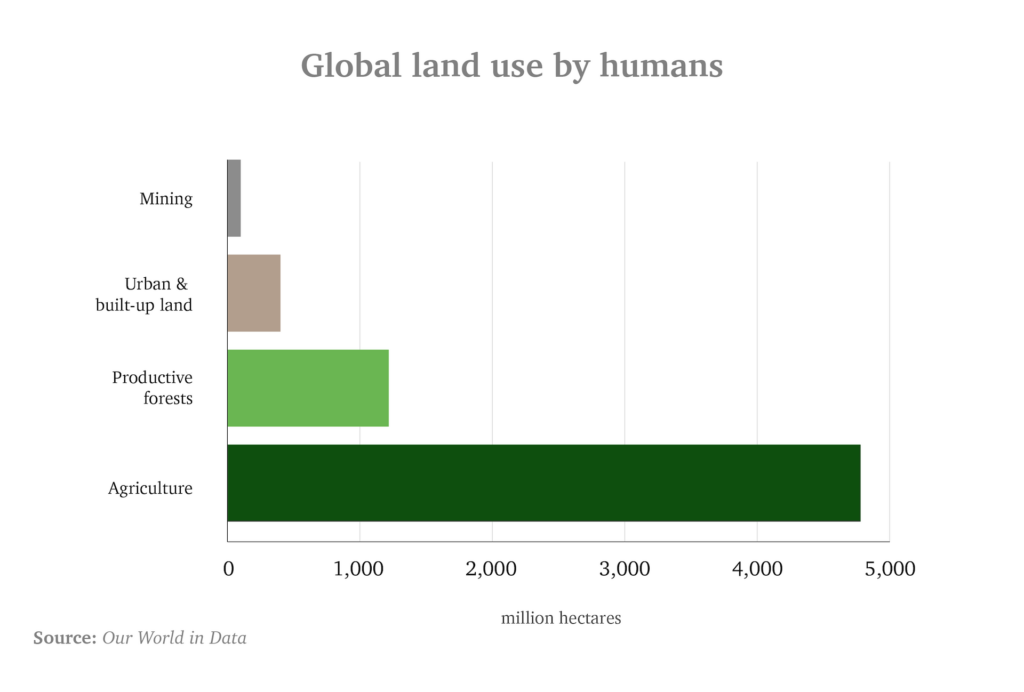
On a global scale, 3.8 billion hectares of land are used to feed livestock, which represents 80% of all agricultural land. This covers 36% of all habitable land on Earth. This means that more than one out of every three hectares of land capable of supporting vegetation—across the entire planet—is used to feed livestock. About 70% of that land (roughly 2.7 billion hectares) is used to feed ruminants — primarily cattle. That covers more area than the entire continent of North America including Greenland.
As a point of comparison, all urban and built-up land on Earth covers about 0.4 billion hectares — which is a mere 4% of all habitable land.
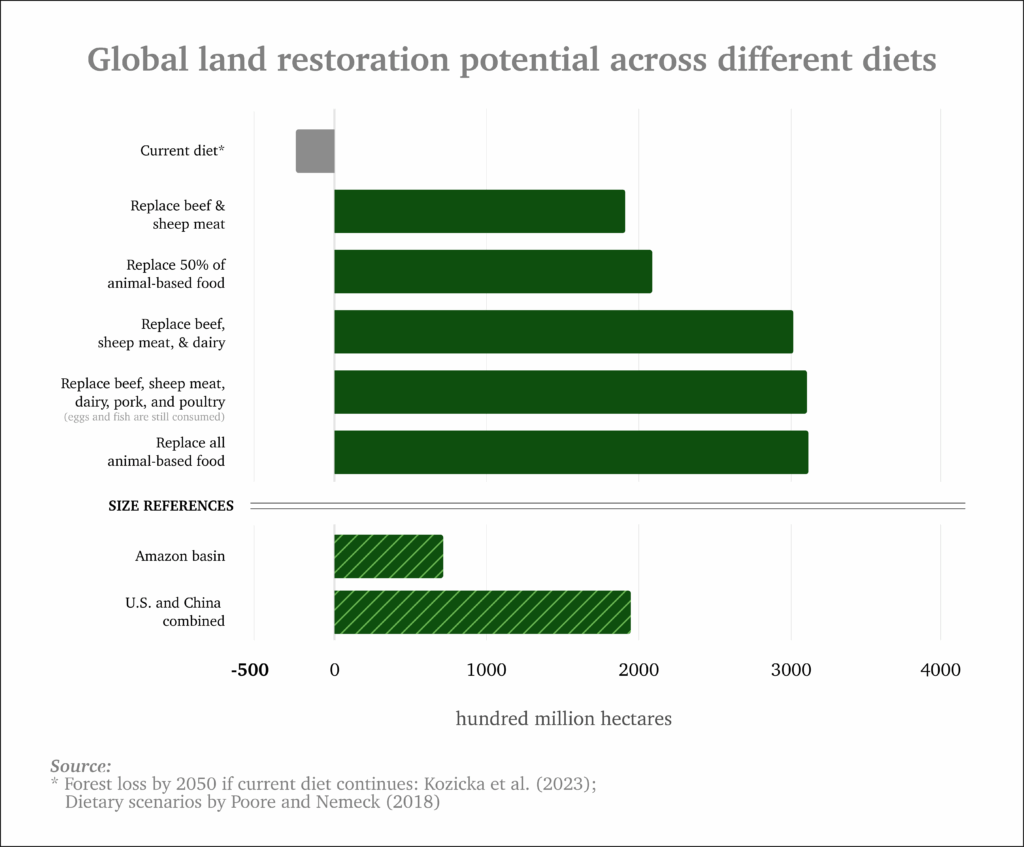
Numerous research studies have explored the capacity for dietary changes to open the door to reforestation and natural regeneration on a global scale without sacrificing food security. Several studies used integrated assessment models like GLOBIUM or biophysical accounting models like BioBaM. Another study used real-world farm-level data across 570 studies covering 38,700 farms in 119 countries.
I take a deeper dive into these studies in “How to Save the Planet with Food: A data-driven roadmap to global ecological restoration.”
Here’s the high-level summary:
Globally replacing beef and sheep meat with plant-based alternatives — even while maintaining consumption levels of all other animal-based food — would allow 1.9 billion hectares to be reclaimed by forests, grasslands, and wetlands. That is an area of land the size of the entire United States and China combined. Replacing beef alone would achieve the vast majority of those gains.
This single adjustment has the capacity to simultaneously:
- halt worldwide deforestation
- free up an entire continent worth of land for reforestation and natural regeneration
- offset the CO2 emissions of every single train, plane, automobile, and ship in the world
- lower near-surface air temperatures by up to 2°C across much of the planet.
And those are just the headline outcomes.
To learn more, check out “This is the Shortest Path to Fixing the Planet: How to do it in 30 years.”