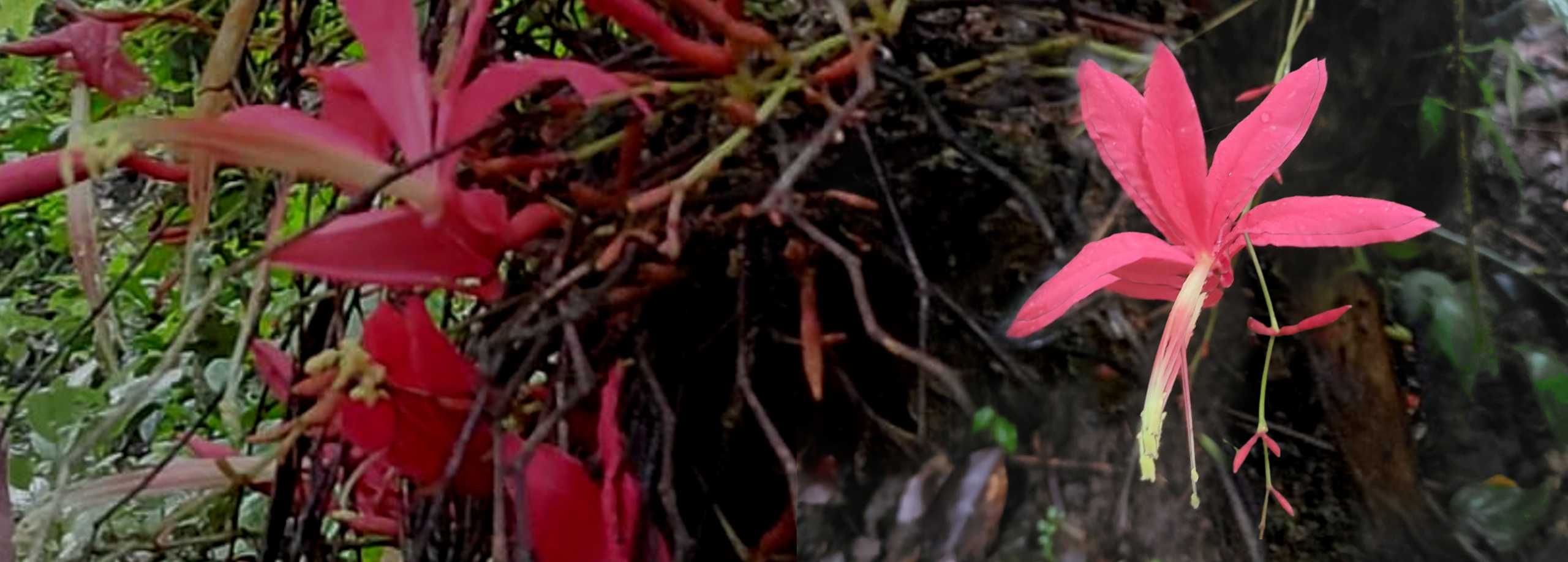
If you stand at the edge of the Cerro Pata de Pájaro protected area at look up at the forest, you might not notice anything unusual at first. The hills roll gently toward the Pacific Ocean, cacao farms are scattered along the base of the slopes, and patches of pristine forest cling to the steep ridgelines. But hidden within this incredible landscape stands one of the rarest trees on Earth.
Haught’s Orchid Tree (Bauhinia haughtii), which has beautiful reddish flower that resemble orchids (it’s not an actual orchid), is a species so rare that it’s currently known from only one place in the world – the forests of Cerro Pata de Pájaro.
For decades, it existed almost as a ghost in the scientific record – mentioned in a handful of collections, rarely seen, and nearly forgotten as the forests around it were consistently cleared. Today, it is officially classified as Endangered by IUCN and Critically Endangered by Ecuador, and its survival hangs by a thread.
When our field team began working in Cerro Pata de Pájaro a few years ago (see Saving the Old-Growth Cloud Forest of Cerro Pata de Pajaro), we didn’t know exactly what we would find. The area had been declared protected in the 1990s, but without consistent management, much of the forest had been slowly felled over time. What remained, however, was something extraordinary – a hidden refuge for rare and endemic tree species called Bauhinia haughtii. Upon further research, our team realized that the trees found in Pata de Pájaro were in fact the last known wild population on Earth.
That discovery sparked urgent action from our team. With financial support provided by our partners at Fondation Franklinia, as well as a group of dedicated supporters in Seattle, we launched a project to do what had never been done before – actively protect, restore, and regenerate the population of this species, as well as its remaining habitat in Pata de Pájaro, before it disappeared.
Finding the Last Trees
Over the past seven months, our days have been spent walking the hills and forests of Pata de Pájaro, often guided by local knowledge as much as by maps. Some trees stand quietly along the borders of farms, others tucked into small pockets of forest that escaped the chainsaws prior to TMA’s arrival.
Each time our team encounters a new tree or local population, there is a moment of amazement. These are not just any tree, they are survivors of a species on the brink of extinction.
Each individual our team finds is tagged, measured, and geo-referenced (record their location). This information forms the basis of the first complete picture of the species true conservation status. For the first time, we are beginning to understand just how close it came to disappearing entirely, and how much work lies ahead to bring it back.
To date, our team has identified 115 mature trees in and around Pata de Pájaro. At first glance, that might sound like a lot of trees. But when you realize these may be the only remaining individuals of this species on Earth, the weight of that number becomes clear.
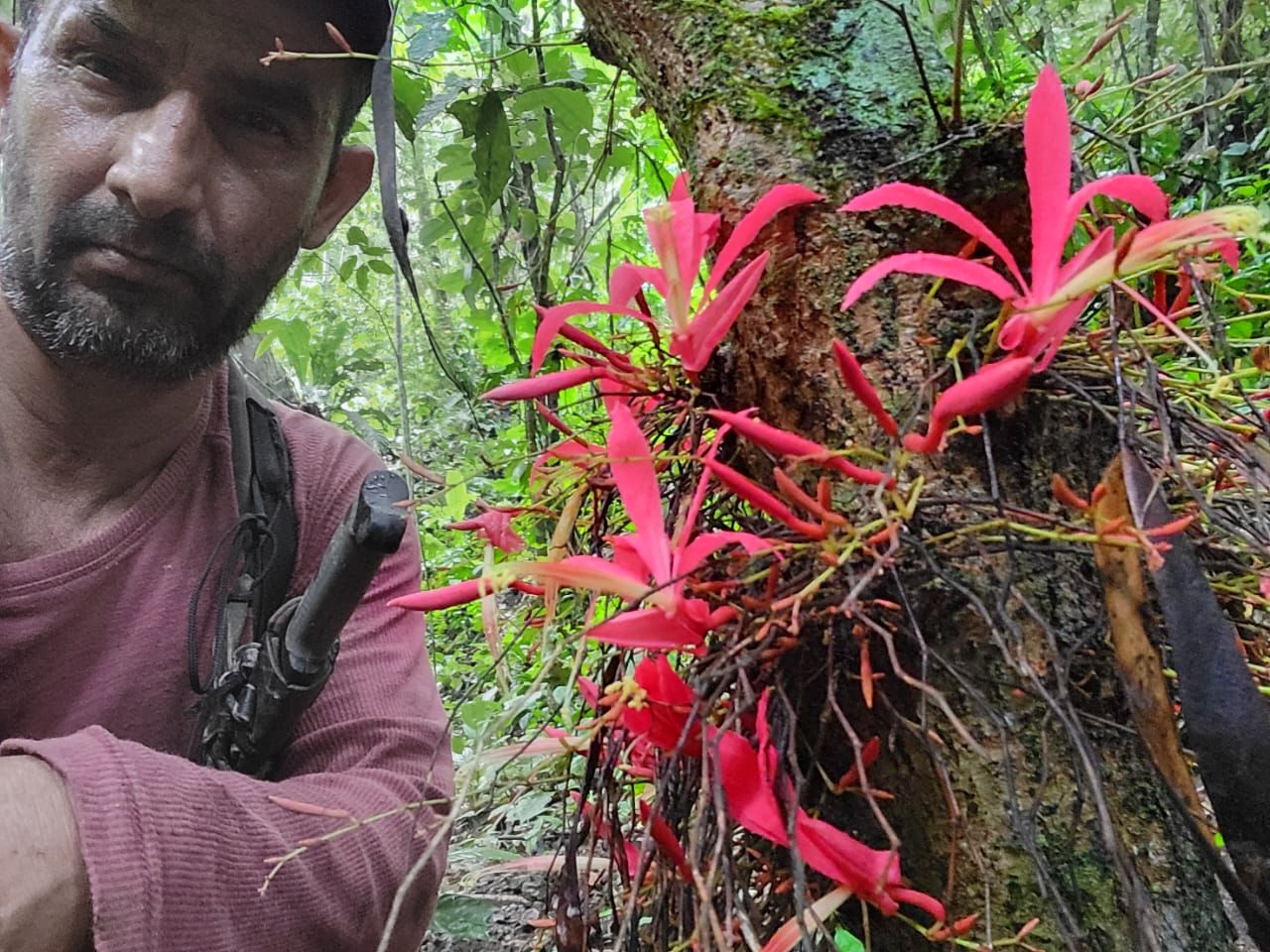
TMA team member Carlos Robles standing next to a flowering Bauhinia haughtii in Pata de Pajaro.
Growing Hope from Seeds
In many ways, the future of Bauhinia haughtii now begins in small, locally-run nurseries that TMA helped set up together with local landowners.
From seeds carefully collected from mature trees, we have started growing a new generation of seedlings. It’s delicate work that requires balancing the need to collect enough seeds to propagate the species while also ensuring the remaining trees are not stressed or have their seed banks over harvested.
In these nurseries, rows of young plants are beginning to take shape. Each small seedlings that germinates and begins to grow represents another step away from extinction.
But what makes this effort truly special is where these seedlings are going. Some will be planted back into the protected forest of Pata de Pájaro, helping to restore what has been lost over the past few decades. Others are being shared with local families who live adjacent to the forest – people who are now becoming active partners in protecting and regenerating this species.
Conservation That Includes People
In Pata de Pájaro, conservation is not just about protecting trees; it’s about working with the people who live with them.
Many of the remaining Bauhinia trees are found near smallholder farms, where families depend on crops like cacao to make a living. Over the years, economic pressures have driven deforestation, not out of disregard for nature, but out of necessity.
That’s why this project is built on partnership.
We’ve spent time meeting with landowners, listening to their stories, and inviting them to be part of the solution. Through our Regenerative Agroforestry Program, we support families in transitioning to more sustainable farming practices that improve livelihoods while restoring the forest. This is how lasting conservation is done.
When a family chooses to plant and care for Bauhinia seedlings on their land, or within their shade-grown cacao farm, it becomes more than conservation. It becomes shared stewardship.
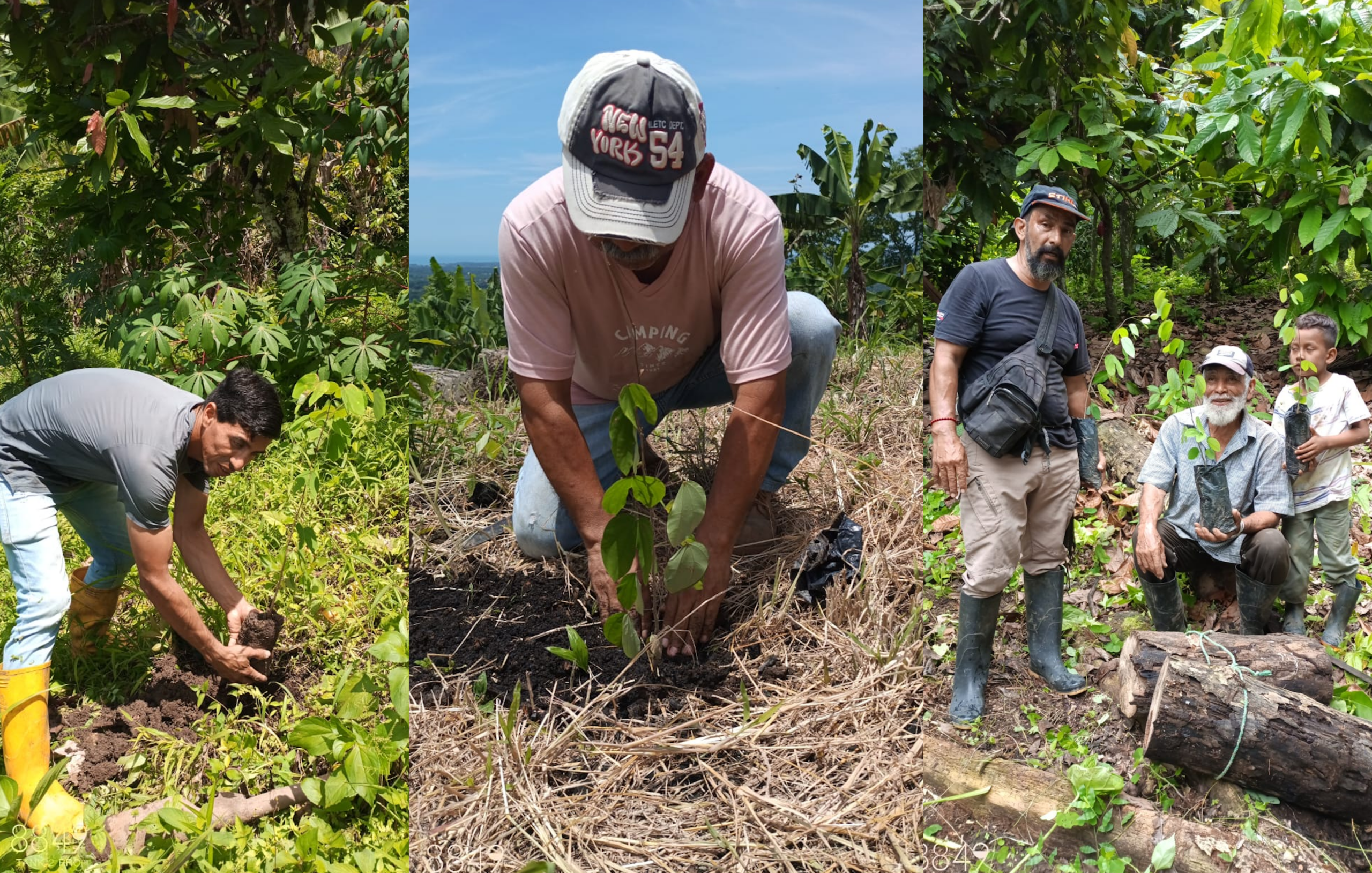
Local families supporting reforestation efforts by planting Bauhinia seedlings on their properties adjacent to Pata de Pajaro.
Building a Future for the Forest
While much of our work happens on the ground, another critical piece is taking shape behind the scenes.
For the first time in its history, Cerro Pata de Pájaro is nearing the completion of a formal management plan. This plan, which TMA is developing in collaboration with Ecuador’s Ministry of Environment, will provide the legal and strategic foundation needed to ensure that conservation efforts continue long into the future.
It’s a quiet milestone, but an essential one. Without long-term planning and protection, even the most dedicated field efforts can eventually fade. With it, there is a real chance for lasting impact.
Part of Something Bigger
The story of Bauhinia haughtii is, in many ways, just one thread in a much larger vision.
Cerro Pata de Pájaro is a key piece of TMA’s Capuchin Corridor – a 40,000-hectare conservation initiative that aims to reconnect forests, protect biodiversity, and support local communities. By protecting and restoring this landscape, we are not only helping a single species survive. We are regenerating an entire ecosystem that provides habitat for wildlife, protects water sources, and sustains the people who call this region home and who are vital to its protection.
A Story Still Being Written
There is still a long way to go. Our initial surveys tell us that the number of surviving Bauhinia haughtii trees is small. The pressures on the forest remain real. And restoring a species from the edge of extinction is never a simple tasks. But there is hope!
There are seedlings growing where there were none before. There are families choosing to protect rather than clear the land. There is a management plan in development that will guide the future of the forest. There is a dedicated team of TMA personal and local community members working every day to make sure this species does not disappear. And there is you, the supporters of TMA that help make all of this work possible.
From a handful of scattered endangered trees, a new and optimistic story is beginning to take root.
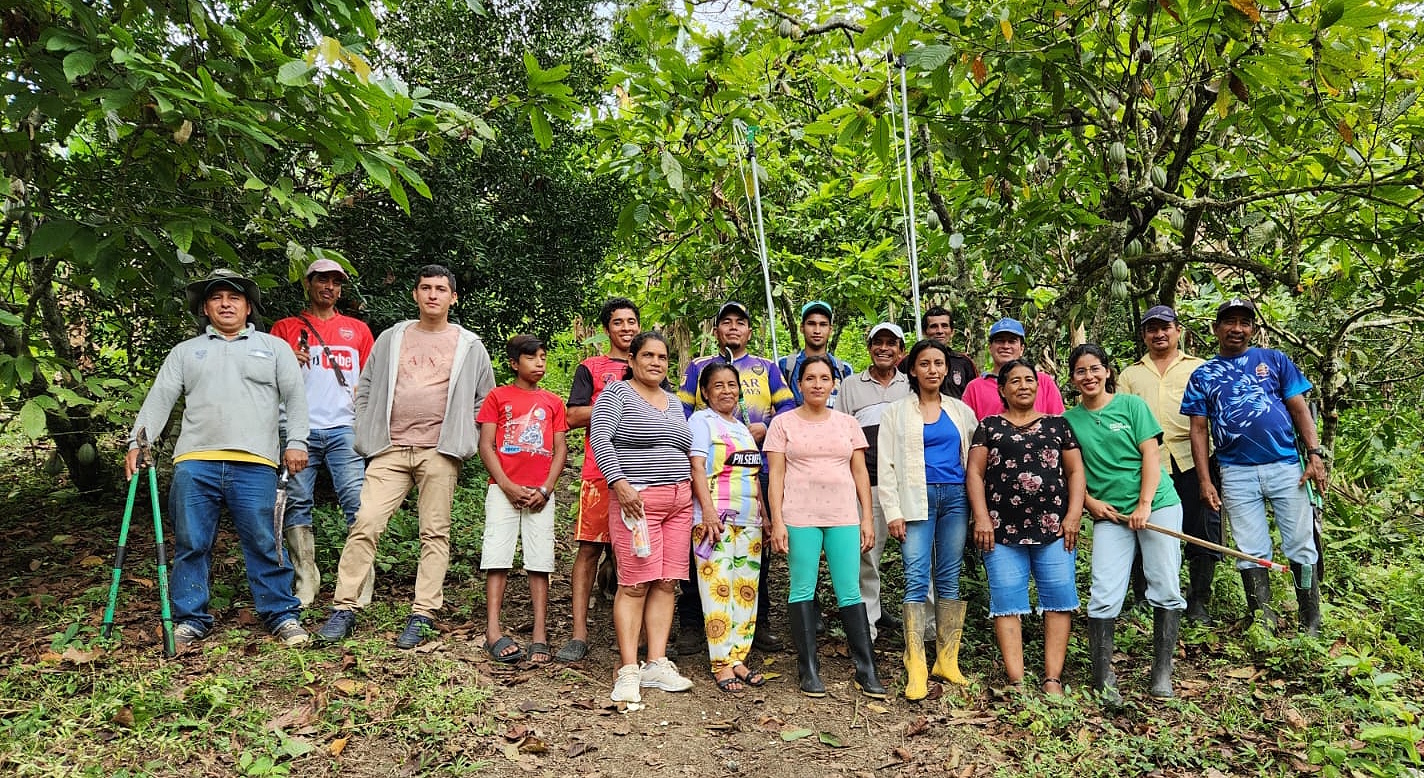
Local families that work hand-in-hand with TMA in the protection and restoration of Pata de Pajaro.
How You Can Help
Our continued efforts to protect and restore the threatened forests of Pata de Pajaro depends entirely on the support we receive from donors, supporters, and partners around the world. Contributing to our Purchase and Protection Fund provides critical funding to ensure local park rangers and community members have the resources necessary to continue this important work.
Donations of all sizes are welcome, but a contribution of $125 allows our team to protect an acre of threatened forest for an entire year. And, contributing $700 allows us to purchase and permanently protect an acre of threatened forest in the Capuchin Corridor. Without your support, none of this work would be possible.