Conservation begins with knowing what’s happening in the forest, but in some of the world’s most threatened ecosystems, seeing wildlife is often the hardest part. In the Pacific Forest of Ecuador, many species are elusive, nocturnal, hidden high in the canopy, or simply too rare to spot with regular field surveys. Even motion-triggered camera traps have limits; they only capture what passes directly in front of the camera.
That’s why TMA has spent the past five years building one of Ecuador’s most advanced bioacoustic monitoring programs. Working with partners like Dr. Shawn McCracken (Texas A&M–Corpus Christi), Rainforest Connection (RFCx), and Huawei Technologies, we’ve deployed a landscape-scale network of programmable acoustic recorders (AudioMoths) and satellite-connected Guardian devices across the Capuchin Corridor. These tools allow us to listen to the forest continuously (24/7), capturing the full soundscape of birds, mammals, amphibians, insects, and even human activity.
In a landscape where more than 98% of native forest has already been lost, sound is revealing a picture of biodiversity that our eyes alone could never detect.
Sound Reveals What the Eyes Rarely See
Many species that define the Pacific Forest of Ecuador are nearly invisible to human observers. Some call only before dawn, some move too fast to be reliably seen, and others—like the Ecuadorian Capuchin monkey—are so critically endangered that visual encounters are extraordinarily rare.
Bioacoustics bypasses this challenge entirely. Wildlife species use sound to communicate, defend territory, navigate, and find mates. These vocalizations carry across hundreds of meters, cutting through dense vegetation. Acoustic recorders automatically pick up these signals, often detecting species weeks or months before a human survey might encounter them.
Beginning in 2020, TMA and our partners built an automated monitoring program using AudioMoths (programmable acoustic recorders) to understand which species live in and around protected areas like the Jama-Coaque Reserve and Cerro Pata de Pájaro, and how they respond to different land uses across the wider landscape.
Bioacoustics Unlocks Landscape-Scale Insights
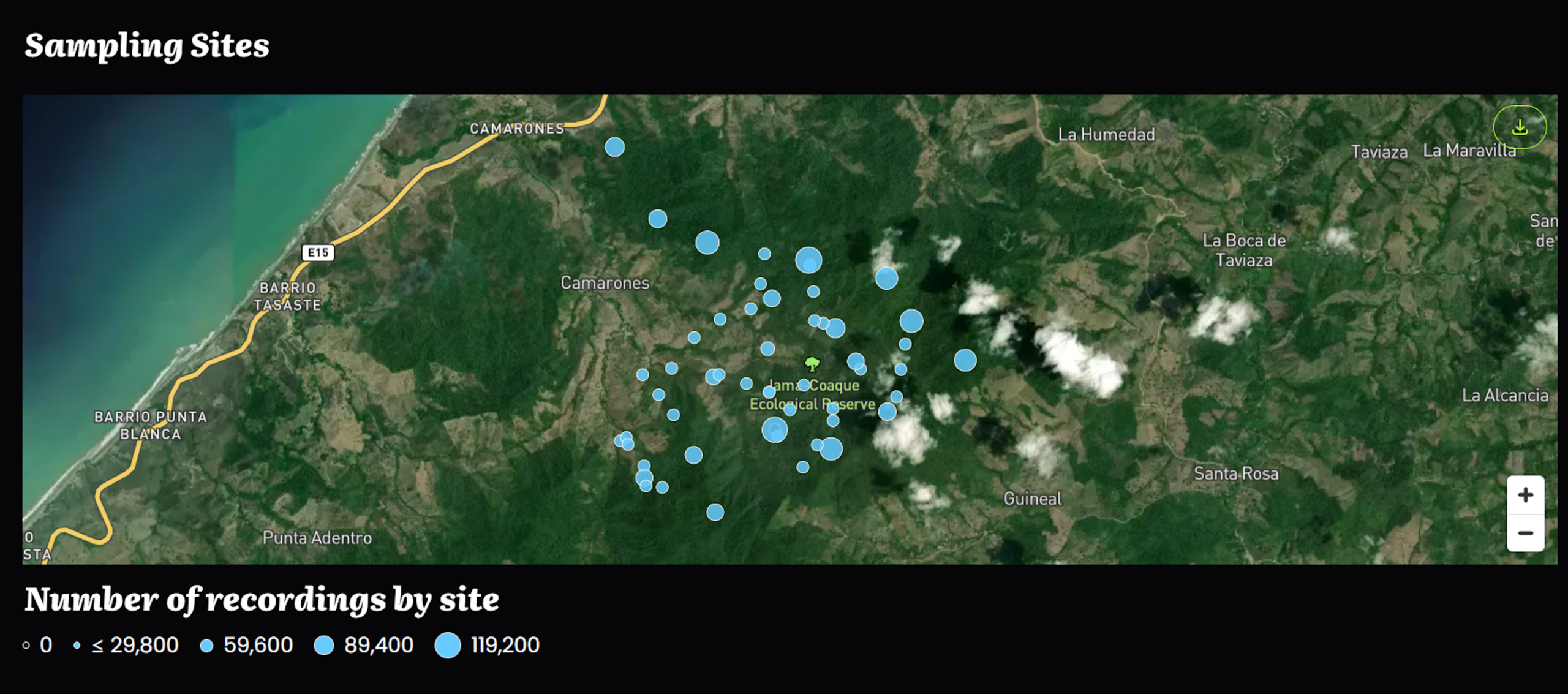
Our team deployed more than 50 AudioMoths across nine transects, each covering three distinct habitat types: cattle pasture, cacao agroforestry farms, and native forest. Each device was programmed to record one minute of sound every five minutes around the clock—a design that has produced more than two million recordings to date.
This design allowed us not only to document which species were present, but also to understand how wildlife moves through a fragmented landscape.
The findings were clear and powerful: native forest and agroforestry farms hosted far more species than cattle pasture. Agroforestry, in particular, showed high conservation value—reinforcing TMA’s efforts to support regenerative cacao farming as a wildlife-friendly alternative to cattle ranching or monoculture farming.
The AudioMoths also detected numerous threatened species, including the Gray-backed Hawk, Slaty Becard, Ecuadorian Mantled Howler Monkey, and—most excitingly—the critically endangered Ecuadorian Capuchin.
These kinds of landscape-wide insights are nearly impossible to obtain from visual surveys alone and extremely difficult to achieve using only camera traps.
Why Camera Traps Aren’t Enough
Camera traps are an essential tool, and TMA uses them extensively. But they come with built-in limitations: they record only what passes directly in front of their sensors. Small wildlife may not trigger them, arboreal species may not pass by the camera’s field of view, and many species avoid trails where cameras are placed.
Bioacoustic devices, on the other hand, monitor everything audible within hundreds of meters. Instead of a single, narrow window, they capture the full acoustic footprint of the forest. And unlike a single snapshot of a passing animal, bioacoustics can reveal continuous patterns such as daily behavior cycles, seasonal shifts, and responses to habitat change (i.e. deforestation).
Where a camera trap might miss a species entirely, a single call in the distance can confirm its presence for bioacoustic analysis.
AI Makes Acoustic Monitoring Fast, Accurate, and Scalable
Collecting sounds from the forest is only half the breakthrough. The real innovation comes from the AI model developed by TMA and Rainforest Connection using the Arbimon analysis platform.
With more than 2 million audio recordings from 50+ sites across the Capuchin Corridor, we trained a Convolutional Neural Network (CNN)—essentially an AI species-detection engine—to automatically identify wildlife vocalizations. Think of it as Shazam, but for birds, monkeys, amphibians, and insects.
Every species’ call has a distinctive “sound fingerprint” when visualized on a spectrogram (see below). Once the AI model learns this pattern, it can scan thousands of hours of audio and instantly highlight moments that match. Over time, the model becomes increasingly skilled at distinguishing species—even when calls overlap or background noise is strong.
The result: near-perfect performance across all trained species classes and extremely low false-positive rates—accuracy that would be impossible through manual listening alone.
Where a team of biologists might take months or years to review so many recordings, the AI can do it in minutes. This technological advance frees our field staff to focus on what matters most: conservation action.
Visualization of pattern matching analysis in Arbimon platform. Species detected in this example (circled in green as it calls) is the Slate-coloured Grosbeak (Saltator grossus).
Acoustic Monitoring Protects Forests in Real Time
Bioacoustics isn’t just about studying biodiversity, it also helps protects it.
Rainforest Connection’s Guardian devices detect the acoustic signatures of chainsaws and gunshots and send real-time alerts to TMA’s field team via text message. During the project, one Guardian on the northern extent of the Jama-Coaque Reserve repeatedly triggered chain-saw alerts from a neighboring property, allowing our park rangers to monitor the situation closely and ensure the activity didn’t enter the Reserve.
This type of rapid detection is simply not possible with camera traps or with periodic patrols. The soundscape of the entire landscape gives us time to respond, not just time to analyze.
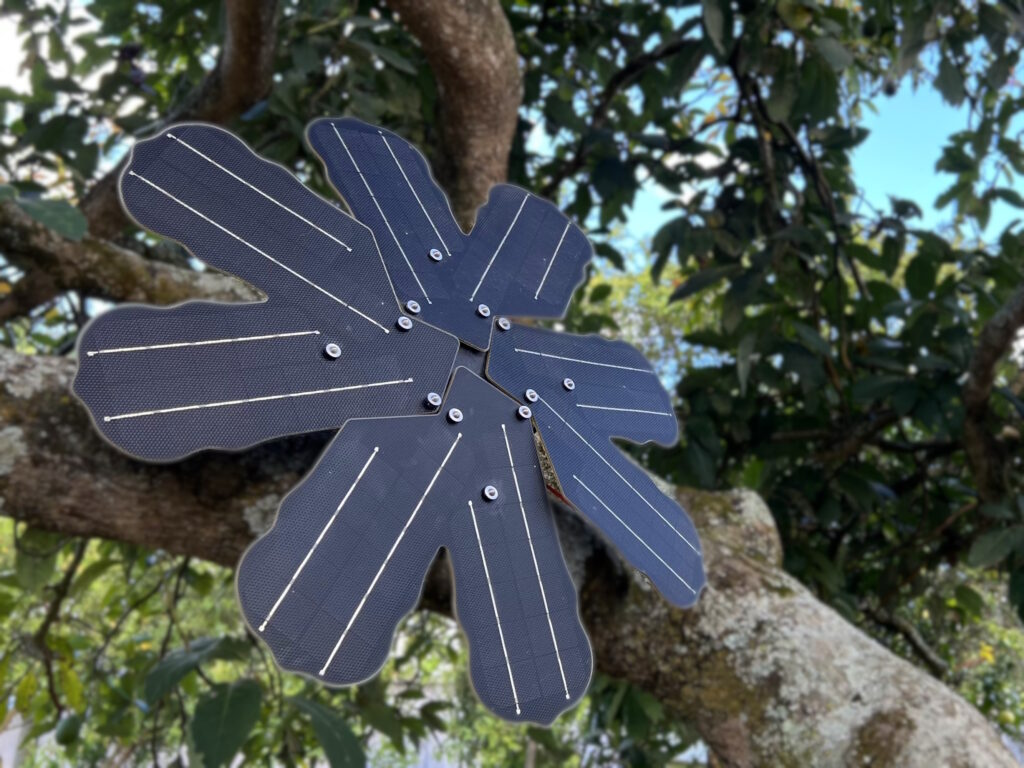
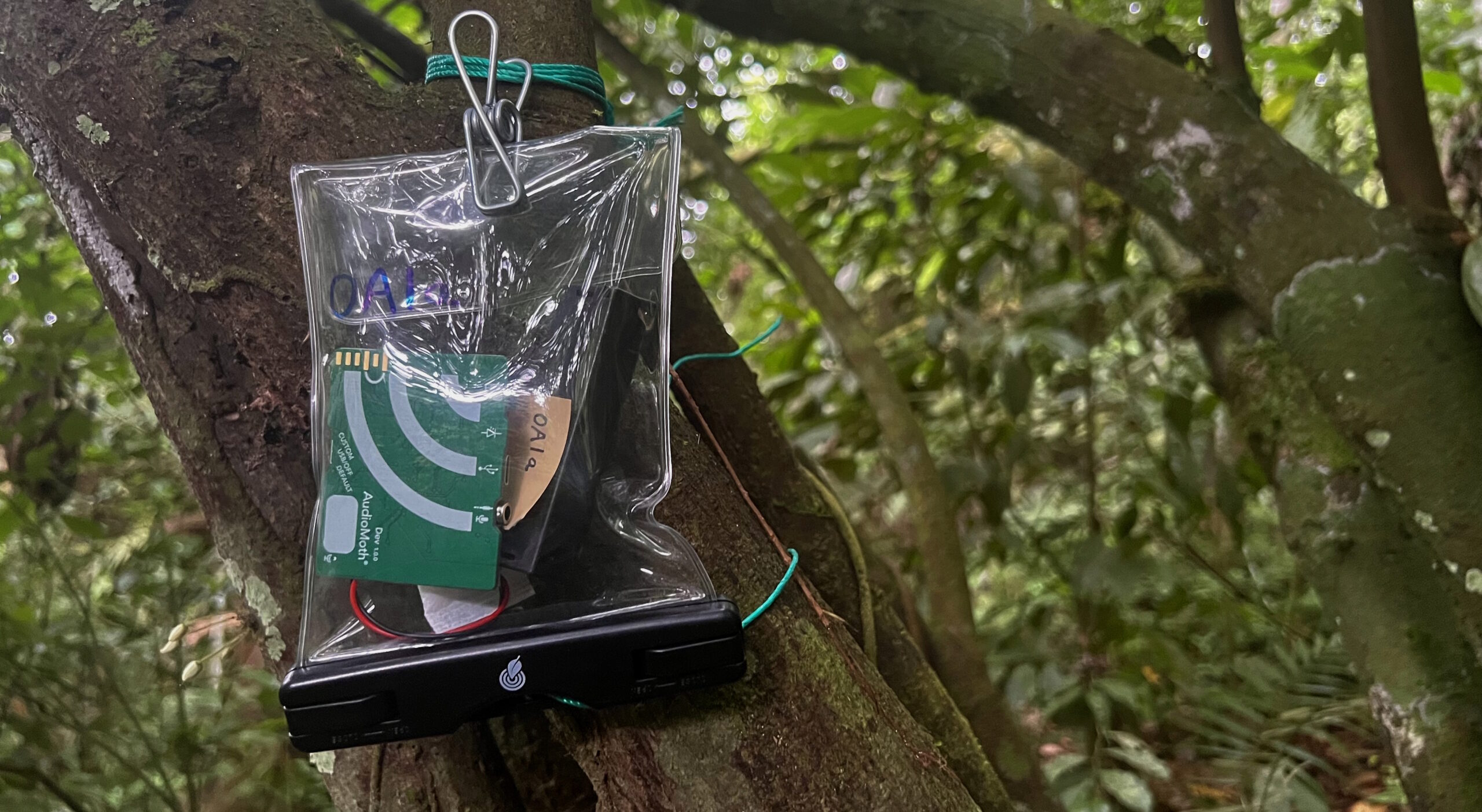
Satellite-connected Guardian device placed in the canopy of the rainforest in the Jama-Coaque Reserve to detect potential threats in real-time.
A Conservation Tool for the Future
Bioacoustic monitoring doesn’t replace field biologists; it supercharges their ability to protect the threatened Pacific Forest of Ecuador. It creates an objective, continuous, scalable record of ecosystem health that complements camera traps, on-the-ground expertise, and community knowledge.
As TMA expands acoustic monitoring across new properties and restoration sites, sound is becoming one of our most powerful allies in safeguarding what remains of the Pacific Forest of Ecuador.